
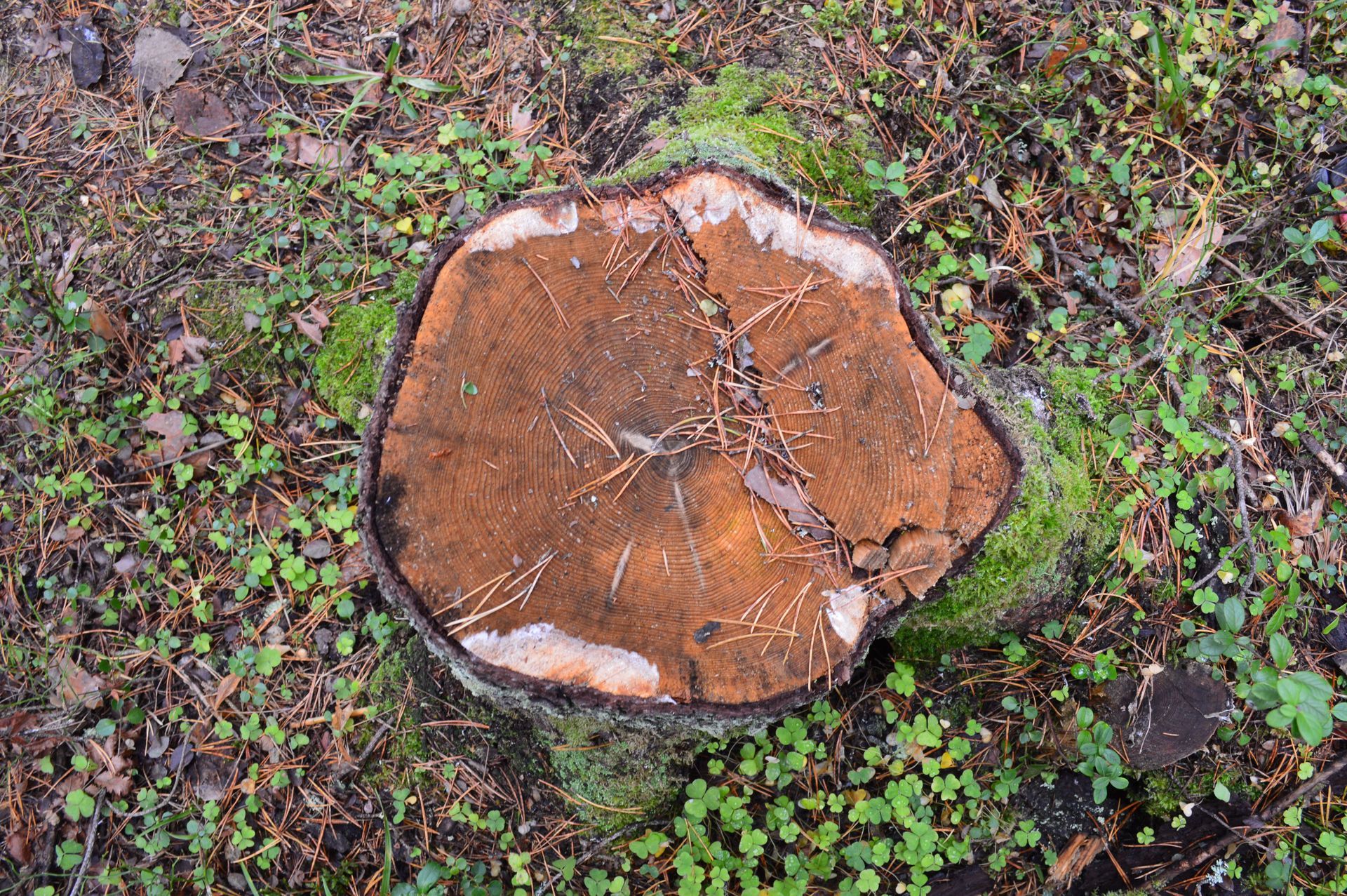
Ground-Level Removal That Clears the Way
Stump Grinding in Chancellor for properties with obstacles after tree removal
Top Shelf Tree Services handles stump grinding in Chancellor, Dothan, Hartford, and surrounding areas when trees have been removed but visible stumps remain across your yard or worksite. The process involves grinding stumps several inches below ground level using specialized equipment that reduces the wood to mulch and eliminates the raised obstacle. Property owners throughout Chancellor request this service to remove tripping hazards, open space for new landscaping, or prepare ground for construction and lawn improvements.
Grinding goes beyond surface-level cutting by attacking the stump vertically through rotating carbide teeth that chip away layers until the remaining wood sits below the soil line. This approach removes the visible mass and root crown without excavating the entire root system, which often extends well beyond the trunk diameter and would require heavy machinery to extract fully.
Request a property evaluation to assess stump size, location, and access for grinding equipment.
What Happens After Stump Grinding Finishes
The grinding equipment pulverizes wood into chips and sawdust that settle into the void left by the stump. You end up with a depression filled with mulch material where the stump once stood, and the surrounding grade no longer includes a raised trunk or protruding root collar. Grinding typically extends six to twelve inches below soil level depending on stump diameter and root structure.
Once the stump is ground down, the area becomes usable for planting grass seed, installing pavers, laying utility lines, or placing garden beds without cutting tools or digging through dense root mass. The mulch byproduct can be spread across planting areas or hauled away depending on your landscape plans. Eliminating the decaying wood also reduces activity from termites, carpenter ants, and beetles that colonize old stumps and may migrate toward nearby structures.
Grinding works for stumps of any size, though larger diameter stumps generate more debris and require additional grinding time. Access matters as well—equipment needs clearance through gates, between buildings, or around obstacles to reach the stump location. On undeveloped land or commercial sites where multiple stumps exist, grinding clears the way for grading, construction staging, or land use changes without the cost and disruption of full stump extraction.
What Property Owners Usually Ask
Customers in Chancellor and nearby areas often have questions about how stump grinding works and what to expect once the service is scheduled.
Top Shelf Tree Services provides stump grinding for residential yards, commercial properties, and undeveloped land throughout the Chancellor area. Schedule an estimate to review stump locations and discuss debris handling options based on your property plans.
How deep does the grinding equipment go below the surface?
The grinder typically removes stump material six to twelve inches below ground level, which sits beneath the root flare and allows soil and grass to cover the area without interference from remaining wood.
What happens to the wood chips left after grinding?
The mulch can stay on-site and be used as ground cover in planting beds, or it can be hauled away as part of the cleanup if you prefer a level grade ready for sod or hardscape installation.
Does grinding eliminate regrowth from the stump?
Grinding removes the energy reserves stored in the trunk and crown, which stops most species from resprouting, though some aggressive root systems may send up shoots that require follow-up treatment.
How long does it take to grind a stump?
Grinding time depends on stump diameter and wood density, with smaller stumps taking fifteen to thirty minutes and larger stumps requiring an hour or more of continuous grinding.
Can stumps near fences, driveways, or buildings be ground safely?
Yes, equipment can work in tight spaces as long as there is clearance for the grinder to approach the stump and maneuver without damaging adjacent structures or underground utilities.