
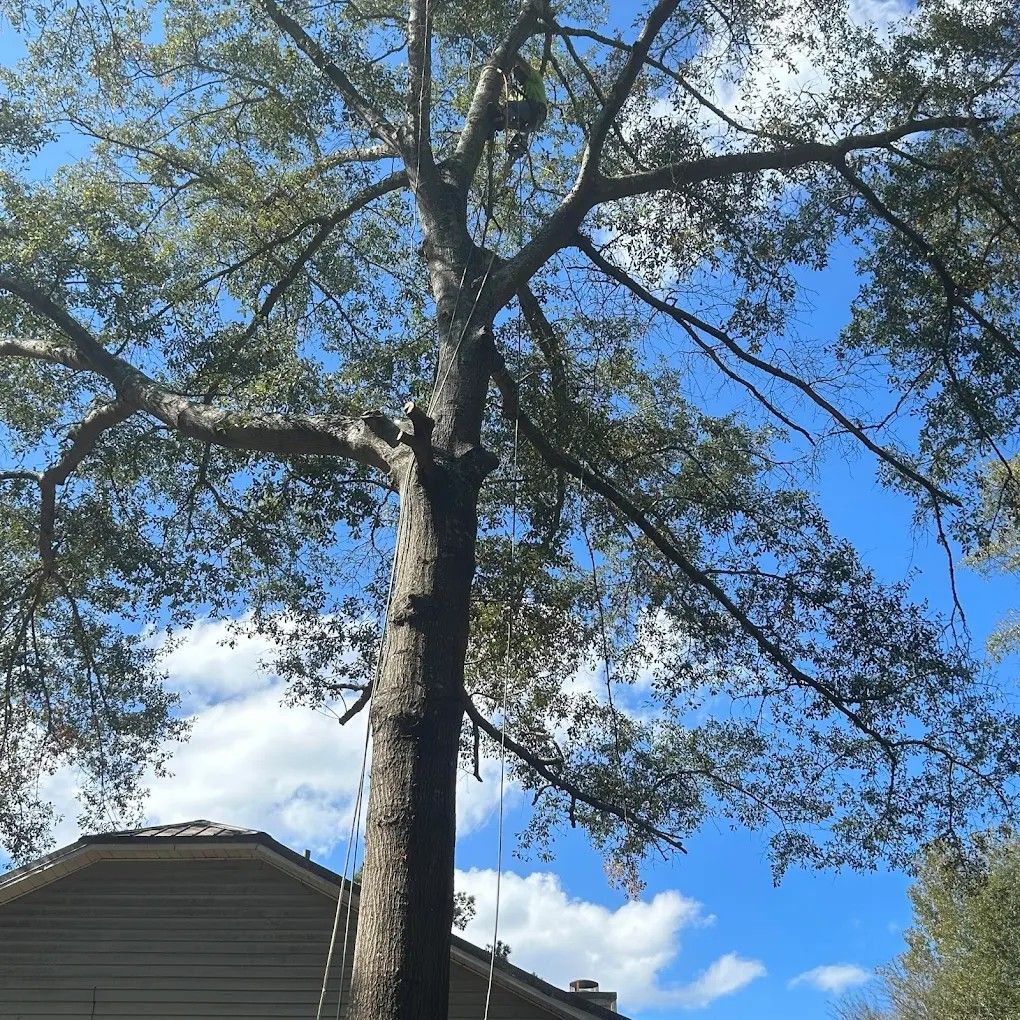
Structural Development That Prevents Future Problems
Tree Pruning in Chancellor for young trees, ornamentals, and mature specimens requiring health-focused care
Weak branch attachments form when trees develop co-dominant stems with narrow bark inclusions rather than single dominant leaders with well-spaced lateral branches, creating split risks that worsen as trees mature and weight increases. Your landscape trees benefit from pruning when they show dead wood accumulation, disease symptoms spreading through canopies, or growth patterns that compromise long-term structural integrity. Top Shelf Tree Services handles tree pruning in Chancellor, Hartford, Dalville, and surrounding areas, focused on promoting healthy development, removing damaged or diseased wood, and correcting problematic growth before issues become severe enough to require removal.
Pruning differs from trimming by emphasizing tree health and structure over immediate size control or clearance concerns, though both services improve safety and appearance. Young trees receive formative pruning that establishes strong scaffold branch arrangements, while mature specimens need corrective pruning to address decay, injury, or growth defects that developed over decades.
Arrange an evaluation to assess which trees need pruning based on current condition and growth patterns.
How Pruning Promotes Long-Term Tree Health
Work begins with removing dead branches that provide no benefit and create disease entry points, then addresses damaged wood where storms broke limbs partially or stripped bark. Diseased sections come out to prevent pathogen spread through vascular tissues, and weak branches with poor attachment angles get removed before they grow large enough to cause significant damage when they inevitably fail.
You notice improved canopy density as remaining branches receive more resources and light, reduced deadwood accumulation that previously attracted boring insects and decay fungi, and better overall tree form as corrected growth patterns develop over subsequent seasons. Properly pruned trees allocate energy toward productive growth rather than maintaining weak or declining branches, resulting in more vigorous foliage and increased resistance to pest pressures common throughout Alabama.
Ornamental trees like dogwoods and redbuds respond to careful pruning that preserves flowering wood while removing crossed or damaged branches, and shade trees develop stronger structures when pruning occurs during establishment years rather than waiting until problems require drastic correction. Timing varies by species and specific objectives, with some work best completed during dormancy and other situations requiring immediate attention regardless of season.
Questions Before Starting Your Project
Property owners considering pruning services often want to understand what makes this work different from standard trimming and how it affects tree longevity.
Top Shelf Tree Services customizes pruning methods to match individual tree species, age, and condition rather than applying standardized approaches. Request a professional pruning assessment to determine which trees would benefit from health-focused care during the current growing season.
What makes pruning different from regular trimming?
Pruning prioritizes removing dead, diseased, and structurally weak wood to improve tree health, while trimming focuses on size control and clearance around structures or utilities.
How does removing dead branches help living trees?
Dead wood provides no photosynthesis benefit, creates weight without structural contribution, harbors insects and disease organisms, and often falls unexpectedly causing property damage or injury.
When should young trees receive formative pruning?
Trees benefit most from structural pruning during their first five to seven years when correcting growth patterns requires smaller cuts that heal quickly and redirect energy efficiently.
What signals that a mature tree needs corrective pruning?
Visible decay in major limbs, canopy sections dying back progressively, bark cracks near branch unions, and leaning growth that worsens annually all indicate structural problems addressable through strategic pruning.
Why do some Chancellor trees need pruning more frequently than others?
Fast-growing species produce more deadwood and weak growth requiring regular attention, while slow-growing hardwoods often need only occasional corrective work once proper structure establishes during early development.