
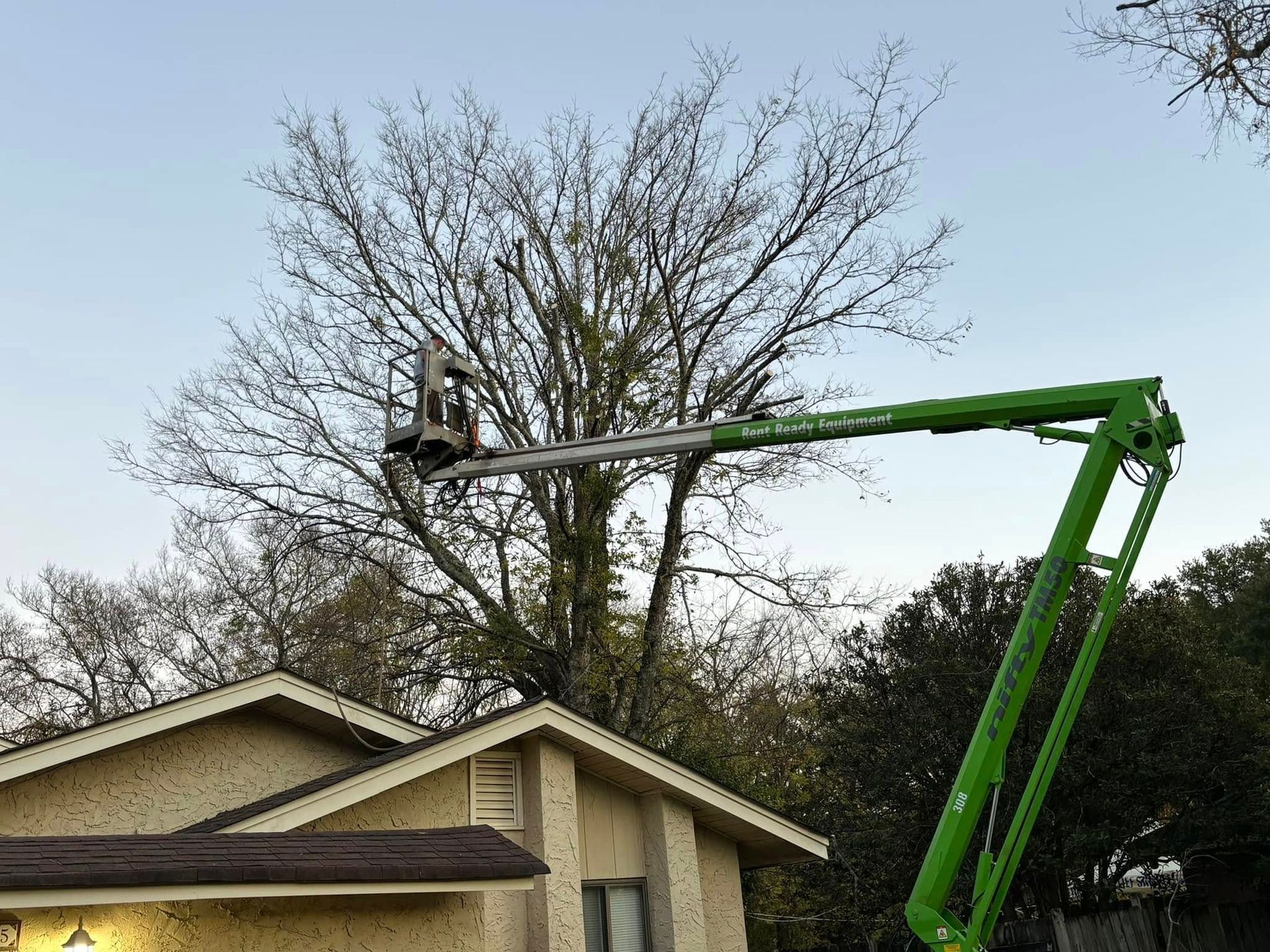
Canopies Maintained for Safety and Appearance
Tree Trimming in Chancellor for overgrown branches affecting structures, utilities, and landscape visibility
Branches scraping against roof shingles during wind events wear through protective granules and create entry points for moisture infiltration that leads to decking rot and interior ceiling stains. Top Shelf Tree Services provides tree trimming in Chancellor, Enterprise, Geneva, and surrounding areas, addressing overgrown limbs, crossing branches that rub bark wounds into trunk surfaces, and canopy density that blocks airflow and promotes fungal growth in Alabama's humid climate. Your trees require trimming when branch tips reach within six feet of structures, when lower limbs obstruct walkway clearance below eight feet, or when utility companies issue notices about vegetation approaching service lines.
Trimming removes specific branches rather than reducing overall canopy size, focusing cuts on growth that creates hazards or aesthetic problems while preserving the tree's natural form and structural integrity. Techniques vary by species since oaks tolerate different pruning timing than maples, and ornamental trees require lighter touch than fast-growing shade species that respond aggressively to heavy cuts.
Schedule routine maintenance before storm seasons when high winds turn untrimmed branches into projectiles.
What You Notice Once Trimming Is Finished
Your trimming plan targets branches extending beyond intended canopy limits, eliminates crossing limbs that create wounds where disease enters, and opens interior canopy zones where stagnant air promotes pest infestations. Cuts occur at lateral branches or collar junctions rather than mid-span locations that leave stubs prone to decay, and removal weight gets distributed across multiple cuts to prevent bark tearing down the trunk during limb descent.
After completion, you notice clearance restored between branches and roof surfaces, improved sunlight patterns reaching foundation plantings or lawn areas beneath canopies, and reduced leaf accumulation in gutters since fewer twigs deposit directly overhead. Trees develop more intentional shapes that frame your home rather than overwhelming architectural details, and storm events produce less debris since weak or poorly attached branches no longer remain in the canopy waiting to fail.
Residential trimming typically operates on annual or biennial cycles depending on growth rates, while commercial properties often contract seasonal visits timed before peak customer traffic periods when curb appeal matters most. Work excludes activities that harm long-term tree health such as topping, which removes so much canopy that stress responses produce weakly attached sprout clusters and accelerated decline.
What Property Owners Usually Ask
Homeowners and business owners across Chancellor and neighboring communities frequently need clarification about trimming practices before authorizing work on mature landscape trees.
Top Shelf Tree Services adjusts trimming approaches based on individual tree conditions rather than applying uniform methods across all species and situations. Contact our team to arrange an assessment of which trees would benefit from trimming during the current season.
What determines which branches get removed during trimming?
Dead wood comes out first, followed by branches crossing or rubbing others, then growth extending toward structures or utilities, and finally limbs creating imbalance or obstructing sight lines.
How does trimming reduce storm damage risks?
Removing branches with weak attachment angles, eliminating long horizontal limbs with excessive end weight, and thinning dense canopies reduces wind resistance that causes breakage during severe weather common to the Chancellor area.
When should trimming happen for different tree species?
Oaks trim best during dormancy to avoid attracting beetles that spread wilt disease, while maples and most ornamentals tolerate trimming across broader seasonal windows with less risk of stress-related decline.
What separates quality trimming from damaging practices?
Proper cuts occur just outside branch collars without leaving stubs or cutting flush into trunk tissue, and removal amounts stay below twenty-five percent of total canopy to avoid shock responses.
Why does trimming improve tree appearance beyond just size control?
Selective removal reveals branching structure, balances canopy shape, removes distracting water sprouts and suckers, and allows light penetration that keeps interior foliage healthy rather than creating hollow shell canopies.